
Cybersecurity

Top 5 Cybersecurity Threats Facing Small Businesses Today (And How to Prevent Them)

The cybersecurity landscape has shifted dramatically, and small businesses are now prime targets. Hackers are no longer just lone operators; they are armed with powerful AI systems designed to exploit the security gaps common in smaller organizations. According to experts, a staggering 82.6% of phishing emails analysed recently showed signs of AI use, and 76% of organizations admit they cannot keep pace with these AI-powered attacks.

Here are the top 5 AI-driven threats facing your business today and how to stop them.

1. AI-Generated, Highly Personalised Phishing: Gone are the days of phishing emails filled with typos and generic greetings. AI now scrapes data from LinkedIn, company websites, and previous data breaches to create highly convincing, personalized messages. An employee might receive an email that looks exactly like a legitimate invoice from a known vendor, complete with accurate project details.

    How to Prevent It:

    • Implement Email Authentication: Use DMARC, SPF, and DKIM protocols to prevent spoofing.
    • Deploy AI-Powered Email Filters: Use security tools that can analyze and block sophisticated phishing attempts.
    • Train Your Staff: Create a strong verification culture and run regular phishing simulations to keep employees vigilant.

    2. Deepfake and AI-Powered Impersonation: Deepfakes are no longer just a novelty. Attackers are using AI to clone an executive’s voice from publicly available conference talks or videos. They then use that clone to make phone calls to finance departments, urgently requesting fraudulent wire transfers. Over 10% of companies have already faced deepfake fraud.

      How to Prevent It:

      • Establish Verification Protocols: Mandate multi-person approval for any financial requests, especially those received via phone.
      • Use Code Words: Implement internal code words for verifying sensitive transactions.
      • Train Staff on Social Engineering: Ensure employees are aware of this evolving tactic.

      3. AI-Enhanced Password Cracking: Using massive datasets of leaked credentials, AI tools can now generate incredibly accurate password guesses. They can break 81% of common passwords within a month. If your password follows predictable patterns like “Summer2024!” (capital first letter, season, year, exclamation point), AI tools are programmed to guess it instantly.

        How to Prevent It:

        • Enable Multi-Factor Authentication (MFA): This is the single most important defence. Even if a password is cracked, MFA stops the attacker.
        • Use Password Managers: They generate and store complex, unique passwords for every site.
        • Monitor the Dark Web: Use services that alert you if employee credentials are found in leaked databases.

        4. Shape-Shifting, AI-Generated Malware: Traditional antivirus software relies on recognizing known virus “signatures.” However, AI can now generate polymorphic malware that constantly changes its code to avoid detection. By the time security databases update to recognize one variant, the AI has already created ten new ones.

          How to Prevent It:

          • Deploy Behaviour-Based Endpoint Protection: Move beyond traditional antivirus to Endpoint Detection and Response (EDR) solutions that analyse behaviour rather than just signatures.
          • Maintain Offline, Immutable Backups: Ensure you have clean backups that cannot be encrypted by ransomware, guaranteeing you can recover without paying a ransom.

          5. Automated Reconnaissance and Attack-Chain Planning: Before launching an attack, AI acts as a digital scout. It scrapes public information to build a complete profile of your business. It maps out your organizational chart, identifies relationships between employees, lists your vendors, and maps your technology stack to find weak points.

            How to Prevent It:

            • Limit Public Information: Be mindful of the business details shared on social media and websites.
            • Conduct Regular Security Audits: Proactively find and fix vulnerabilities in your systems.
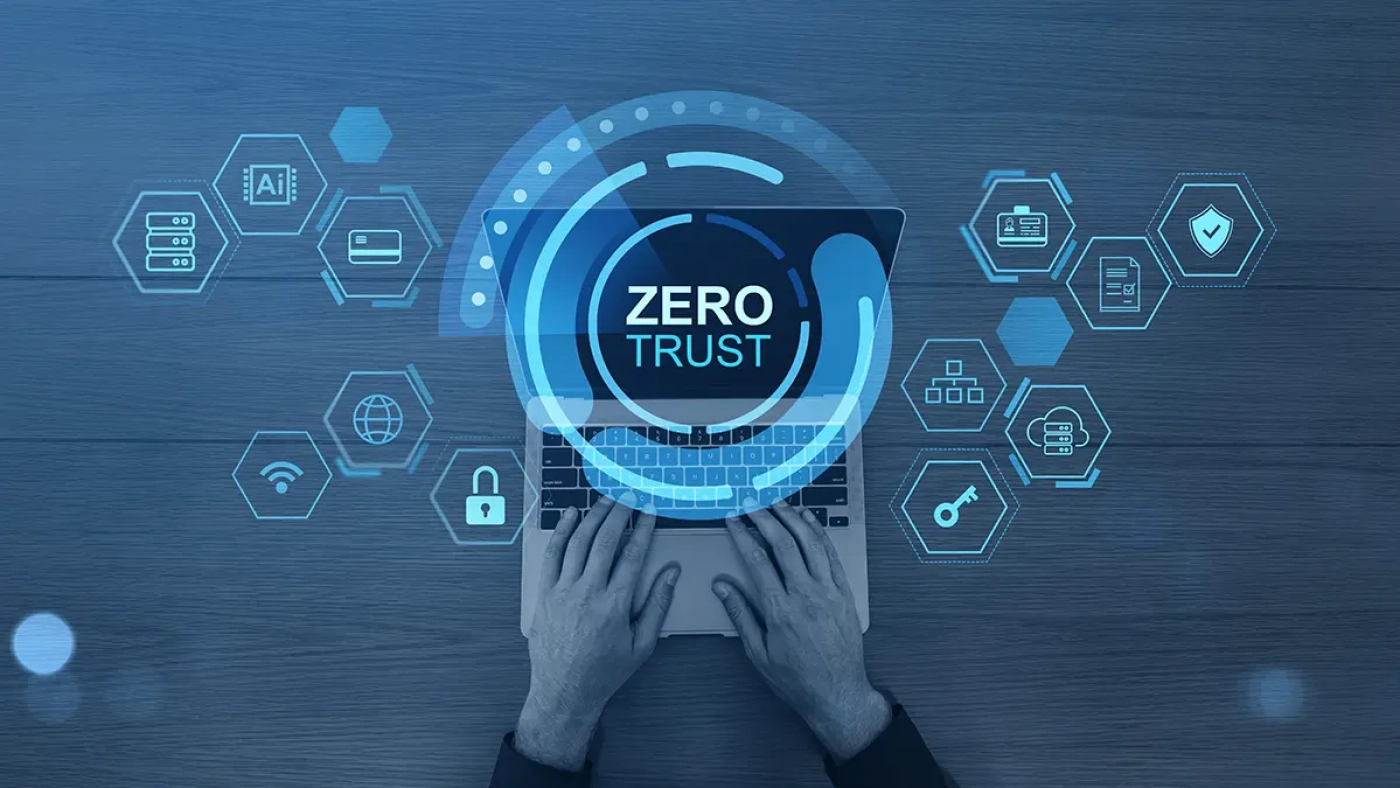
            • Adopt a Zero-Trust Architecture: Never trust, always verify. This limits what an attacker can access even if they manage to get inside your network. simple, with plenty of blue space on either side.
            What-Is-Zero-Trust-Security-And-Why-Your-Business-Needs-It-Now

            What Is Zero-Trust Security and Why Your Business Should Implement It

            Despite massive investments in cybersecurity, breaches continue to happen. The reason? Many organizations cling to old security models that have been proven ineffective against modern threats. The traditional “castle-and-moat” approach assumed that everything inside the corporate network was safe. That assumption is no longer valid.

            Enter Zero-Trust Security. At its core, the principle is simple: “Never trust, always verify.”

            What Zero Trust Really Means
            True zero trust means there is no implicit trust granted to any user or device, regardless of whether they are inside or outside the network perimeter. As Jay Chaudhry, CEO of Zscaler, explains, the goal is to “remove the network from the security equation entirely.” Instead of getting on a network, users and devices establish direct, policy-based connections to the applications they need.

            This architecture assumes that a breach is inevitable or may have already happened, and it is designed to minimize the blast radius by strictly verifying every access request.

            Three Key Principles of a Zero-Trust Architecture

            Make Yourself Invisible to Attackers: In a zero-trust model, your applications and infrastructure are never exposed to the public internet. They are essentially “invisible” to outside scanners and attackers. If attackers can’t find you, they can’t attack you. Connections are established outbound from the user to the application, not inbound from the internet, drastically reducing the risk of external reconnaissance and direct attacks.

            Eliminate Lateral Movement: In a traditional network, once an attacker gains access, they can move laterally—hopping from server to server—to find valuable data. Zero trust segments access to create a “network segment of one” for every device. This means a compromised device in your factory, headquarters, or a remote branch is immediately contained. The attacker cannot “pivot” to other parts of the network because there is no broad network access to exploit.

            Enforce Continuous Verification and Least Privilege: Access is granted based on a dynamic policy that considers user identity, device health, location, and the sensitivity of the data. Crucially, this verification is continuous. If a user’s behaviour becomes anomalous—for example, downloading massive amounts of data at 3 AM—access can be automatically revoked. This aligns with the principle of least privilege, ensuring users only have access to what they need, when they need it .

            Why Your Business Needs It Now

            For a modern business, especially one with remote workers, cloud applications, and a diverse set of users (employees, contractors, partners), the traditional network perimeter has dissolved. Zero trust is the only architecture that works in this new reality.

            Companies like MGM Resorts have embraced zero trust not as a buzzword, but as a practical architecture to simplify and scale security across a vast, diverse environment of hotels, entertainment venues, and corporate offices. By centralizing policy enforcement and leveraging AI insights, they have streamlined incident response and made their security posture far more resilient.

            Adopting zero trust is a journey, but it is the definitive path to securing your business in a world where threats are more sophisticated than ever.

            ai-in-business

            How AI Is Changing IT Support and Cybersecurity for Modern Businesses

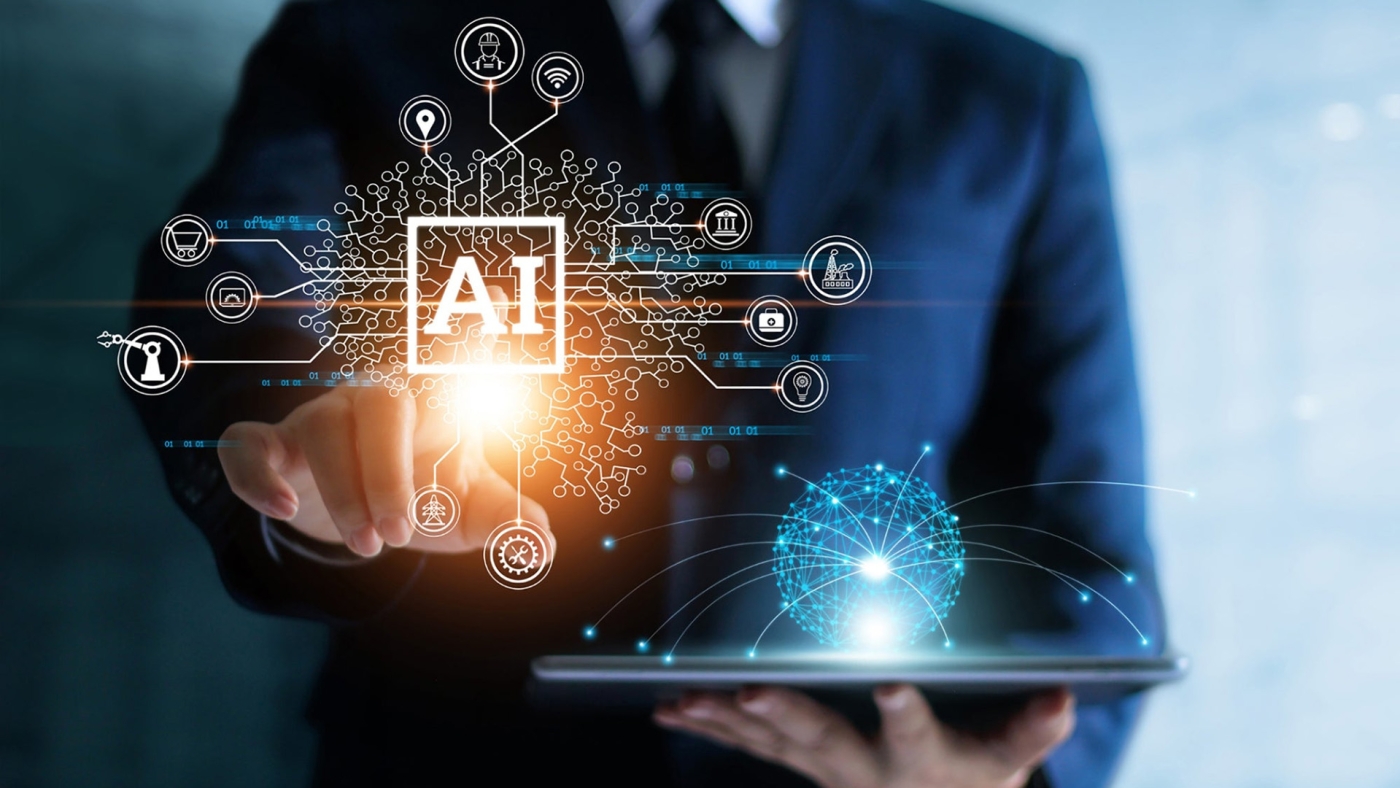
            Artificial Intelligence is no longer a futuristic concept; it’s a pervasive tool reshaping enterprise operation. According to a recent Boston Consulting Group survey, 77% of respondents believe AI agents will be vital to their enterprise functions in the next three to five years. This transformation is perhaps most profound in IT support and cybersecurity, where AI is shifting the “what” of work into the “how.”

            AI as a Force Multiplier for Security Teams

            For years, security teams have been understaffed and overburdened. AI is changing that dynamic by acting as a powerful force multiplier. It’s not about replacing humans, but about augmenting their skills and automating tedious tasks to let them focus on higher-value work.

            • Superhuman Speed and Scale: AI can perform tasks at speeds that far exceed human capacity, exponentially scaling the work a security team can do. It can analyse millions of log events in seconds to find a threat that would take a human days.
            • Unmatched Consistency: AI excels at performing repetitive tasks perfectly every time. This delivers a consistency in security monitoring and patch management that is difficult to achieve with human teams alone.


            How AI is Transforming IT and Security Operations

            Revolutionizing the Security Operations Centre (SOC): In a modern SOC, AI is taking over the majority of Level 1 support tasks. It handles ticket triage, prioritizes alerts, and even automates responses to common threats like phishing emails. This frees up human analysts to focus on more complex Level 2 and Level 3 investigations. Generative AI can even provide junior analysts with automated case studies and step-by-step guidance on how to handle incidents, effectively “uplifting” their skill level in real-time.

            Fighting AI-Powered Attacks: The bad actors are harnessing AI, too. They are using it to generate polymorphic malware that changes its code to avoid detection and to create highly convincing deepfakes for social engineering. This is creating a new paradigm of AI vs. AI. Defensive AI is now essential to match the speed and sophistication of offensive AI, creating a “machine-on-machine” battle where human oversight is the critical control in the cockpit.

            Changing IT Team Structures and Skills: The rise of AI is forcing a rethink of staffing strategies. Traditional entry-level security positions may soon evolve or disappear as AI agents handle more of the basic workflow.

              • New Skills Paradigm: The future IT professional will need a new set of skills, including AI governance, prompt engineering, and data science. They will become “managers of agents,” responsible for guiding and validating the work done by AI.
              • Human-AI Symbiosis: The most effective use of AI is with a human in the loop. While AI provides the analysis, human intuition and context are irreplaceable for making the final call on critical decisions. The future is a partnership, ensuring we use AI to be more productive while maintaining human judgment.
              • The New Imperative: Governing AI Use
                As AI use explodes across the enterprise, security teams have a new responsibility: securing AI itself. Many organizations are lagging here. A concerning 77% of organizations lag in adopting essential Data & AI security practices.

              The Challenge: IT leaders must establish clear policies and training for generative AI use, maintain a comprehensive inventory of AI systems, and ensure that sensitive data isn’t exposed through public AI tools.
              The Solution: Forward-thinking companies are adopting platforms that allow them to govern AI usage safely. Instead of banning AI tools (which drives employees to use them on personal devices), they are inspecting prompts and responses to protect sensitive data while still enabling innovation.
              The future of IT and security operations is being written now. It’s a future defined by speed, scale, and the powerful symbiosis between human expertise and artificial intelligence.