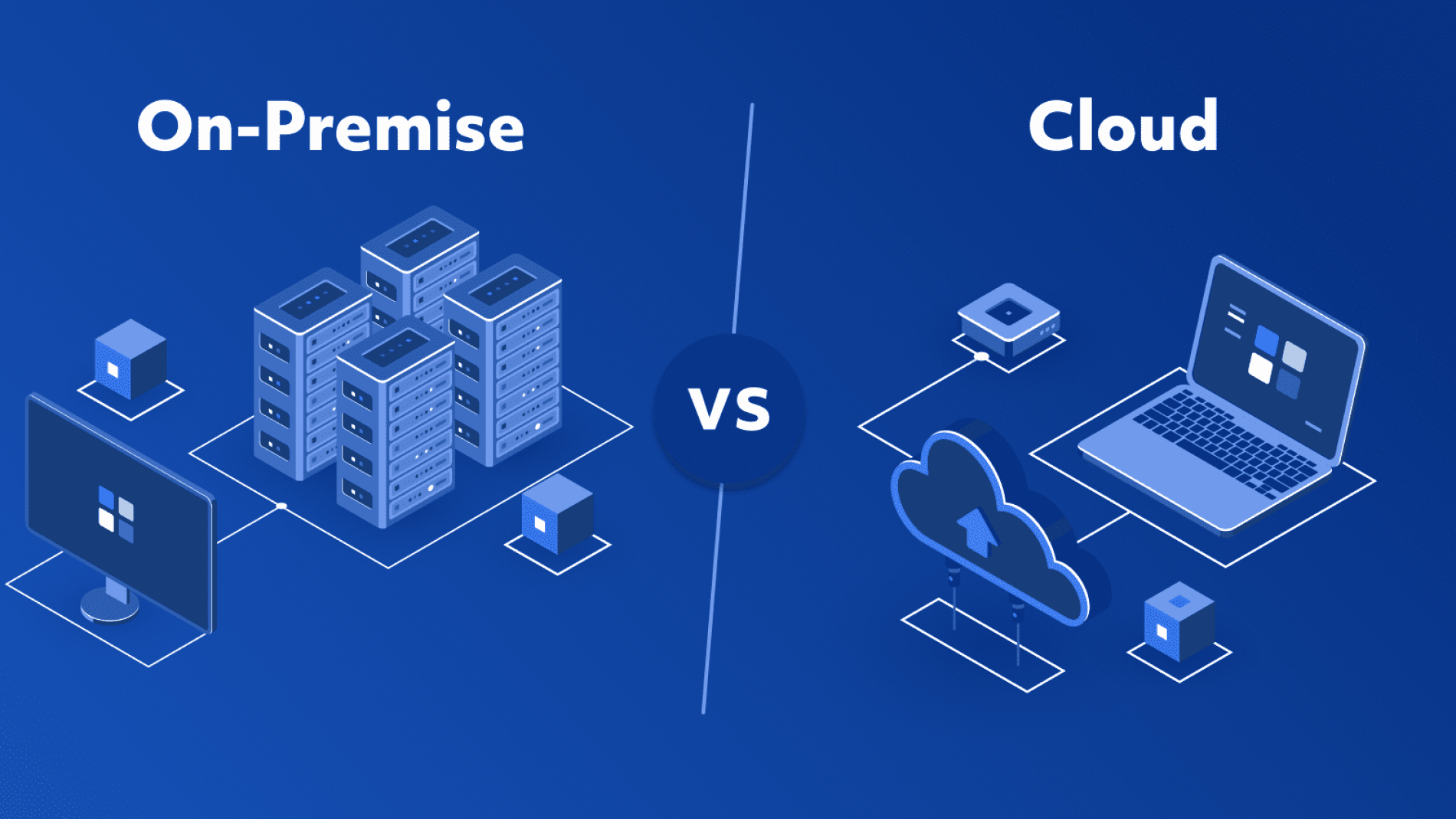
The debate between cloud and on-premises infrastructure is more relevant than ever. While cloud adoption continues to soar—with providers like AWS, Microsoft, and Google seeing growth of over 20%—a trend called “repatriation” is emerging, where some organizations are moving workloads back on-premises. So, how do you decide which is right for your business?
The answer lies in understanding your specific needs for control, cost, performance, and compliance. Here is a decision-maker’s guide to making that choice.
Why Choose Cloud?
For many dynamic and growing businesses, the cloud offers significant advantages.
- Cost Structure: The pay-as-you-go model is attractive for businesses with limited upfront capital. You pay only for the resources you consume, which is ideal for processes with variable or peak loads. This can lead to lower operating costs if managed correctly.
- Scalability and Flexibility: Cloud resources can be scaled up or down in minutes. This agility is perfect for businesses experiencing rapid growth or those with fluctuating demands. SaaS applications scale easily at a moment’s notice.
- Disaster Recovery: Cloud providers offer comprehensive DR options based on multiple, geographically dispersed data centres. This ensures high availability and data redundancy, minimizing data loss in a disaster.
- Managed Security: Hyperscale’s employ massive security teams and run 24/7 Security Operations Centres (SOCs), often providing a level of security that individual organizations couldn’t afford on their own.
However, the cloud requires tight management. Without FinOps practices, costs can spiral out of control. Furthermore, security is a shared responsibility; while the provider secures the physical infrastructure, you are responsible for securing your data, access policies, and configurations. Most cloud breaches happen due to customer misconfigurations, not flaws in the cloud itself.
Why Choose On-Premises?
On-premises IT is far from dead. For some, it’s the most rational and strategic choice.
- Ultimate Control: With on premises, you maintain full control over your data, processes, and infrastructure. There is no third party with potential access to your information. This is of strategic importance for industries handling highly sensitive information, such as defence, government, and financial institutions.
- Regulatory Compliance: In jurisdictions with strict data residency and privacy laws, on-premises infrastructure provides the most direct means to satisfy compliance obligations. It eliminates the ambiguity of international data transfer and vendor-specific compliance requirements.
- Performance and Latency: Certain workloads, like instant payment processing or industrial automation systems, require guaranteed low latency that can be impacted by external network components. On-premises solutions provide this guaranteed performance.
- Predictable Long-Term Costs: While requiring a significant upfront investment, on-premises infrastructure can lead to a lower total cost of ownership (TCO) over time, especially for stable, high-density workloads that run 24/7. You aren’t paying for the same compute cycle month after month forever.
A Note on Security: Cloud vs. On-Premises
It’s a common misconception that cloud environments are inherently less secure. The reality is more nuanced.
- The Attack Surface: Public clouds are massive targets, but they benefit from professionalized security operations that most on-prem environments can’t match.
- The Shared Responsibility Model: This is the key difference. In the cloud, you relinquish some visibility but gain enterprise-grade infrastructure. On premises, you own the entire stack, which is both a burden and a benefit. The most common cloud “breaches” are actually due to customer misconfigurations (e.g., leaving a storage bucket open), not the provider’s infrastructure failing.
The Verdict: The choice isn’t binary. Many businesses thrive with a hybrid approach, keeping sensitive or critical workloads on premises while leveraging the cloud’s agility for other applications. The right choice depends on your specific need for control versus flexibility.
